Buy mircare.eu ?
We are moving the project
mircare.eu .
Are you interested in purchasing the domain
mircare.eu ?
domain@kv-gmbh.de · 0541-91531010
Buy mircare.eu ?
How can 3D printing support overhangs?
3D printing can support overhangs by using support structures. These structures are temporary supports that are printed along with the overhangs to prevent them from collapsing during the printing process. Once the print is complete, the support structures can be removed easily, leaving behind the desired overhang shape. This allows for more complex and intricate designs to be created using 3D printing technology. **
How are support structures used in 3D printing?
Support structures are used in 3D printing to provide stability and prevent the collapse of overhanging or intricate parts of a printed object. These structures are typically added automatically by the 3D printing software based on the design of the object. Once the printing is complete, the support structures can be removed manually or with the help of tools, leaving behind the final printed object. This process allows for the creation of more complex and detailed designs that would otherwise be difficult to achieve without the use of support structures. **


Similar search terms for Komar-Japanese-3D-White
Top-Angebote
Products related to Komar-Japanese-3D-White:
-
Komar Audi R8 Los Angeles 3.68m x 2.54m Matte Mural White/Red/Black 368cm LThe new wall mural comes in 8 paper sheets. Instruction on how to apply wallpaper included. Wallpaper adhesive included. Suitability: interior use (walls). Wallpaper printed using fade-free UV-stabilised inks on wet strength durable 130mg paper. Made in Germany. Komar81,99 £*Shipping: 0,00 £Secure redirect to the provider
-
Inspired Finds 3D Nose Shaper Clip For Nose Bridge Support And Beauty Care 3D Nose Shaper Clip For Nose Bridge Support And Beauty CareEnhance your beauty routine with a simple, comfortable accessory designed for everyday use. This nose shaper clip gently fits over the nose to provide temporary shaping support and complement your facial care routine. Lightweight, reusable, and easy...34,99 $*Shipping: 0,00 $Secure redirect to the provider




-
How should support structures be proportioned for 3D printing?
Support structures for 3D printing should be proportioned in a way that provides enough stability and reinforcement to prevent the printed object from collapsing during the printing process. The support structures should be designed to be easily removable after printing, without causing damage to the final object. It is important to strike a balance between adding enough support to ensure successful printing and minimizing the amount of material used to reduce post-processing work. Additionally, support structures should be strategically placed in areas where overhangs or bridges are present to maintain the integrity of the final print. **
-
How do I remove the support in 3D printing?
To remove support structures in 3D printing, you can use a variety of methods depending on the type of material and the design of the object. For example, if you are using a filament-based 3D printer, you can remove the support structures by carefully breaking them off with pliers or cutting them away with a sharp tool. If you are using a resin-based 3D printer, you may need to use a combination of tools such as tweezers, wire cutters, and sandpaper to carefully remove the supports without damaging the printed object. It's important to take your time and work carefully to avoid damaging the printed object during the support removal process. **
-
How do you remove support structures in 3D printing?
To remove support structures in 3D printing, you can start by identifying the areas where the support material is attached to the printed object. Then, you can use tools such as pliers, tweezers, or a knife to carefully break or cut away the support material. It's important to proceed slowly and cautiously to avoid damaging the printed object. After removing the support structures, you may need to do some additional cleaning or sanding to smooth out any rough areas left behind. **
-
Why can't my graphics card supposedly support 3D acceleration?
There could be several reasons why your graphics card may not support 3D acceleration. It could be due to the age of the graphics card, as older models may not have the necessary hardware capabilities to handle 3D rendering efficiently. Another reason could be outdated drivers or software that are not optimized for 3D acceleration. Additionally, the graphics card may not meet the minimum requirements for 3D acceleration, such as lacking sufficient memory or processing power. **

Which G-code type does my 3D printer support?
To determine which G-code type your 3D printer supports, you can refer to the user manual or specifications provided by the manufacturer. Common G-code types used in 3D printing include G-code generated by slicing software like Cura or Simplify3D, which is typically in the form of G-code commands specific to the printer model. Additionally, some printers may support custom G-code commands for specific functionalities or features. It is recommended to consult the manufacturer's documentation or website for detailed information on the supported G-code types for your specific 3D printer model. **
How do you care for a Japanese ardisia?
To care for a Japanese ardisia, it is important to provide it with well-draining soil and partial to full shade. Keep the soil consistently moist, but not waterlogged, and avoid letting it dry out completely. Fertilize the plant with a balanced, slow-release fertilizer in the spring and summer. Prune the plant as needed to maintain its shape and remove any dead or damaged growth. Keep an eye out for pests such as scale or spider mites, and treat them promptly if they appear. **
Top-Angebote
Products related to Komar-Japanese-3D-White:
-
Komar Japanese 3D White Garden 184cm x 254cm Matte Wall Mural White/Green 254cm LWall Mural photo wallpaper in size 254x184cm. Designed for interior walls. Comes as 4 separate paper sheets. Instruction & wallpaper adhesive included. Manufactured in Germany. Komar77,92 £*Shipping: 0,00 £Secure redirect to the provider
-
Komar Arctic Polar Bear Wall MuralEnter the chill zone with this cool photographic mural! A fuzzy white polar bear sits on top of a glacier in freezing blue waters. Arctic Polar Bear Wall Mural comes on 8 panels and measures 12-ft wide by 8-ft 3-in tall when assembled.41,39 $*Shipping: 0,00 $Secure redirect to the provider
-
How can 3D printing support overhangs?
3D printing can support overhangs by using support structures. These structures are temporary supports that are printed along with the overhangs to prevent them from collapsing during the printing process. Once the print is complete, the support structures can be removed easily, leaving behind the desired overhang shape. This allows for more complex and intricate designs to be created using 3D printing technology. **
-
How are support structures used in 3D printing?
Support structures are used in 3D printing to provide stability and prevent the collapse of overhanging or intricate parts of a printed object. These structures are typically added automatically by the 3D printing software based on the design of the object. Once the printing is complete, the support structures can be removed manually or with the help of tools, leaving behind the final printed object. This process allows for the creation of more complex and detailed designs that would otherwise be difficult to achieve without the use of support structures. **
-
How should support structures be proportioned for 3D printing?
Support structures for 3D printing should be proportioned in a way that provides enough stability and reinforcement to prevent the printed object from collapsing during the printing process. The support structures should be designed to be easily removable after printing, without causing damage to the final object. It is important to strike a balance between adding enough support to ensure successful printing and minimizing the amount of material used to reduce post-processing work. Additionally, support structures should be strategically placed in areas where overhangs or bridges are present to maintain the integrity of the final print. **
-
How do I remove the support in 3D printing?
To remove support structures in 3D printing, you can use a variety of methods depending on the type of material and the design of the object. For example, if you are using a filament-based 3D printer, you can remove the support structures by carefully breaking them off with pliers or cutting them away with a sharp tool. If you are using a resin-based 3D printer, you may need to use a combination of tools such as tweezers, wire cutters, and sandpaper to carefully remove the supports without damaging the printed object. It's important to take your time and work carefully to avoid damaging the printed object during the support removal process. **
Similar search terms for Komar-Japanese-3D-White
-
Komar Audi R8 Los Angeles 3.68m x 2.54m Matte Mural White/Red/Black 368cm LThe new wall mural comes in 8 paper sheets. Instruction on how to apply wallpaper included. Wallpaper adhesive included. Suitability: interior use (walls). Wallpaper printed using fade-free UV-stabilised inks on wet strength durable 130mg paper. Made in Germany. Komar81,99 £*Shipping: 0,00 £Secure redirect to the provider
-
Inspired Finds 3D Nose Shaper Clip For Nose Bridge Support And Beauty Care 3D Nose Shaper Clip For Nose Bridge Support And Beauty CareEnhance your beauty routine with a simple, comfortable accessory designed for everyday use. This nose shaper clip gently fits over the nose to provide temporary shaping support and complement your facial care routine. Lightweight, reusable, and easy...34,99 $*Shipping: 0,00 $Secure redirect to the provider
-
Oral-B Pro-3D White Intensive Whitening dental care setOral-B Pro-3D White Intensive Whitening, , To strengthen tooth enamel for Men, Discover a practical bundle of products designed to enhance your everyday moments. Oral-BPro-3D WhiteIntensive Whitening set takes the hassle out of choosing by offering a combination of popular products. Now available together in one convenient pack. The set contains: Oral-B Pro-3D White Intensive Whitening high-impact whitening toothpaste 3x75 ml Characteristics: removes plaque helps stop tooth decay freshens breath cleans teeth whitens teeth How to use: Follow the instructions on the package.14,40 £*Shipping: 3,99 £Secure redirect to the provider
-
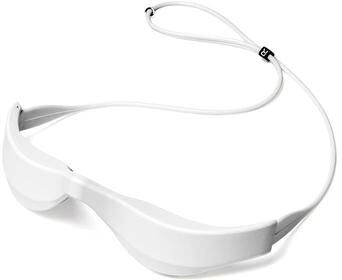
Useful Little Things Adaptive Orbital Rejuvenation Shield And 3D Microcurrent Photon Eye Wellness System whiteStaring at digital screens for long hours, experiencing stressful sleepless nights, or coping with environmental fatigue can leave your eye area looking worn out, puffy, and shadowed by dark, heavy circles. Traditional under eye creams and standard...69,97 $*Shipping: 0,00 $Secure redirect to the provider
-
How do you remove support structures in 3D printing?
To remove support structures in 3D printing, you can start by identifying the areas where the support material is attached to the printed object. Then, you can use tools such as pliers, tweezers, or a knife to carefully break or cut away the support material. It's important to proceed slowly and cautiously to avoid damaging the printed object. After removing the support structures, you may need to do some additional cleaning or sanding to smooth out any rough areas left behind. **
-
Why can't my graphics card supposedly support 3D acceleration?
There could be several reasons why your graphics card may not support 3D acceleration. It could be due to the age of the graphics card, as older models may not have the necessary hardware capabilities to handle 3D rendering efficiently. Another reason could be outdated drivers or software that are not optimized for 3D acceleration. Additionally, the graphics card may not meet the minimum requirements for 3D acceleration, such as lacking sufficient memory or processing power. **
-
Which G-code type does my 3D printer support?
To determine which G-code type your 3D printer supports, you can refer to the user manual or specifications provided by the manufacturer. Common G-code types used in 3D printing include G-code generated by slicing software like Cura or Simplify3D, which is typically in the form of G-code commands specific to the printer model. Additionally, some printers may support custom G-code commands for specific functionalities or features. It is recommended to consult the manufacturer's documentation or website for detailed information on the supported G-code types for your specific 3D printer model. **
-
How do you care for a Japanese ardisia?
To care for a Japanese ardisia, it is important to provide it with well-draining soil and partial to full shade. Keep the soil consistently moist, but not waterlogged, and avoid letting it dry out completely. Fertilize the plant with a balanced, slow-release fertilizer in the spring and summer. Prune the plant as needed to maintain its shape and remove any dead or damaged growth. Keep an eye out for pests such as scale or spider mites, and treat them promptly if they appear. **
* All prices are inclusive of VAT and, if applicable, plus shipping costs. The offer information is based on the details provided by the respective shop and is updated through automated processes. Real-time updates do not occur, so deviations can occur in individual cases. ** Note: Parts of this content were created by AI.